How to track breakage, expiry and waste to understand where stock loses value and cut costs.
Every loss recorded in KlyraOS, with a reason and quantity, feeds an analysis that helps you see whether a problem is recurring on a product, a department or a supplier. Ignoring losses means losing real visibility on food cost.
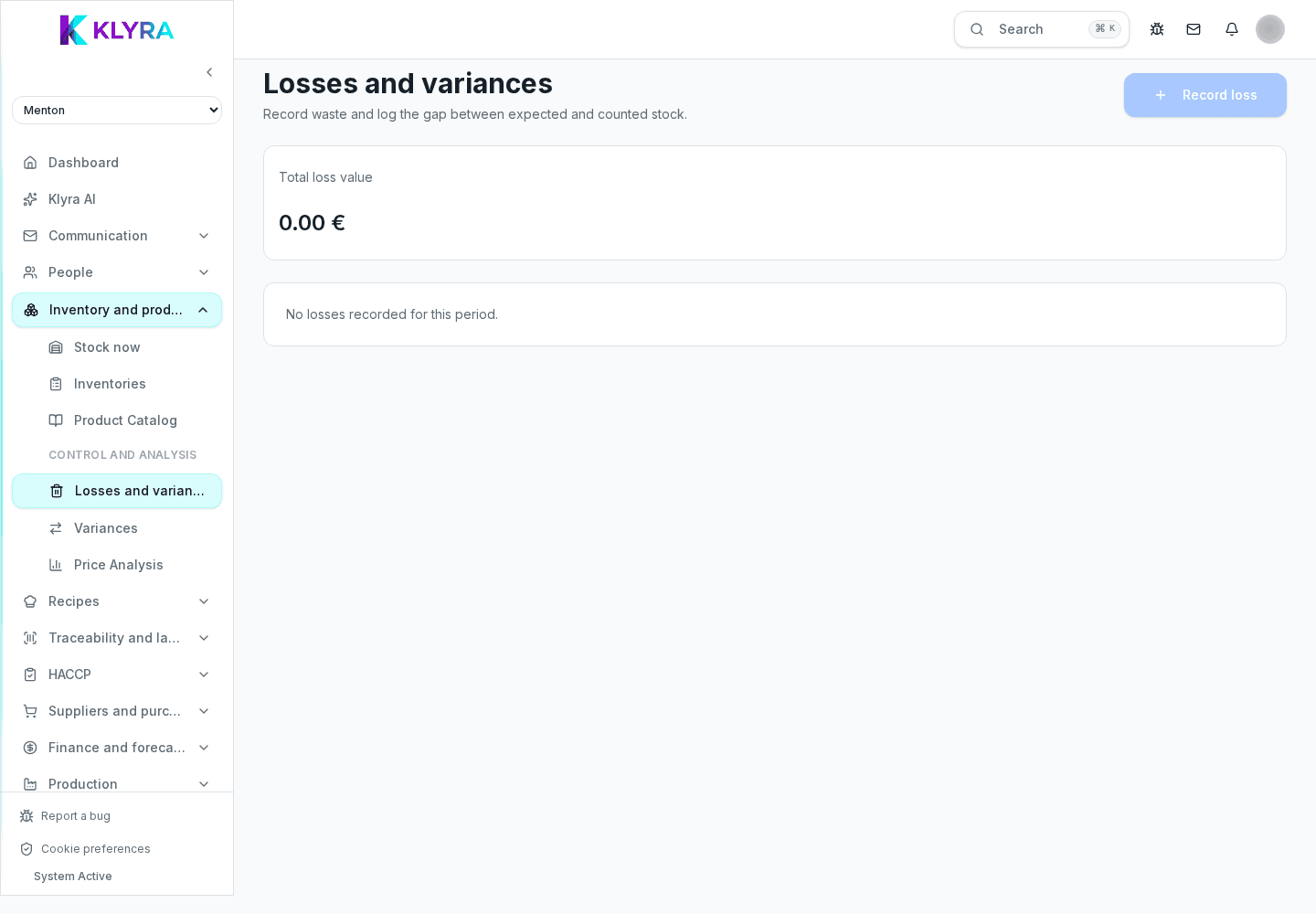
You can record a loss at any time, indicating the product, quantity and reason: breakage, expiry, preparation error, customer complaint or other. The loss updates stock immediately.
Categorising the reason correctly is what makes later analysis useful: waste due to expiry suggests reviewing orders, while recurring breakage may point to a storage issue.
The loss report shows the trend by product, category and department over time, helping you spot seasonal patterns or issues specific to one site.
Recorded losses affect the actual food cost, distinct from the theoretical one calculated only from recipes: comparing the two figures is one of the most useful indicators for a restaurateur.
Do recorded losses affect stock immediately?
Yes, stock updates right after the loss is recorded.
Why is choosing the right reason important?
Because analysis by reason helps distinguish supply, storage or preparation issues, guiding different corrective actions.
Do losses show up in recipe food cost?
Losses contribute to the site’s actual food cost, distinct from the theoretical food cost calculated on individual recipes.
Was this guide helpful?
Still need help?
Describe the issue: page, location, organisation and role are attached automatically.
Contact support