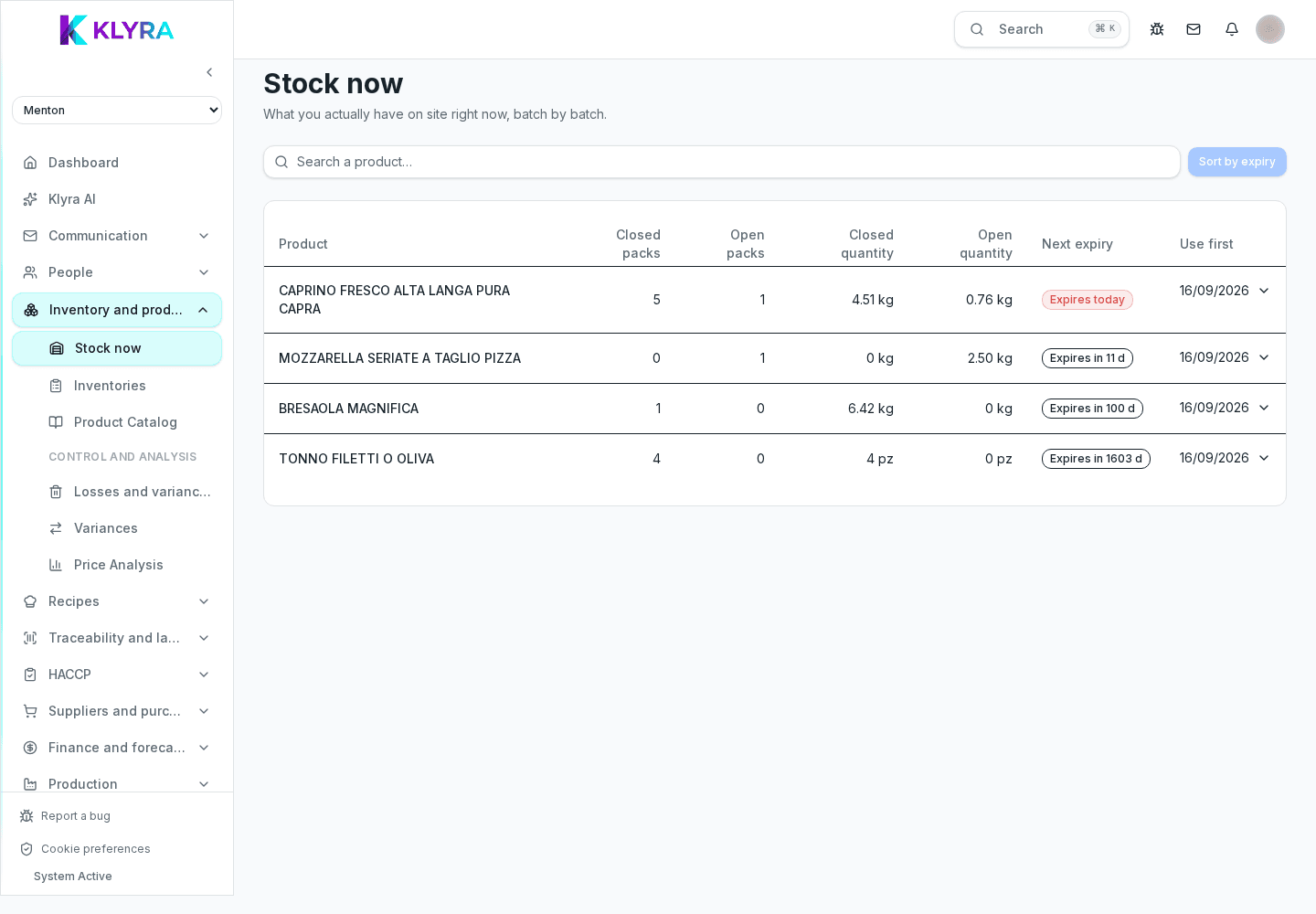
The difference between the always-updated working line and the sealed reserve, and how to keep them aligned without double work.
KlyraOS distinguishes between the open line, meaning what is ready to use in the kitchen or bar, and the sealed reserve, meaning what is still packaged in the pantry or cold room. This distinction makes reading available stock more realistic.
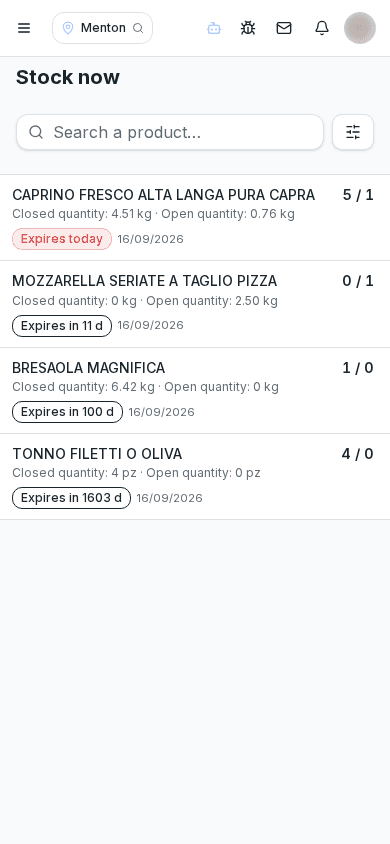
The open line represents opened or ready-to-use products: a started bottle, an open container, an already portioned ingredient. It is the part of stock consumed fastest and needing daily attention.
The sealed reserve is packaged stock not yet opened, typically in a pantry, cold room or cellar. It feeds the open line when needed through a recorded internal transfer.
Every time you move a product from the sealed reserve to the open line, recording the transfer keeps stock correct in both areas and lets you analyse consumption accurately.
Without this split, a restaurant risks treating still-packaged stock as "available", generating wrong forecasts during service.
Why does KlyraOS distinguish between line and sealed reserve?
Because it gives a more realistic view of what is truly ready to use versus what is still packaged in the pantry.
Do I need to record every pack opening?
Yes, it is the most reliable way to keep stock correct in both areas.
Does the sealed reserve count in restock calculations?
Yes, the total stock used for restock suggestions sums the open line and the sealed reserve.
Was this guide helpful?
Still need help?
Describe the issue: page, location, organisation and role are attached automatically.
Contact support