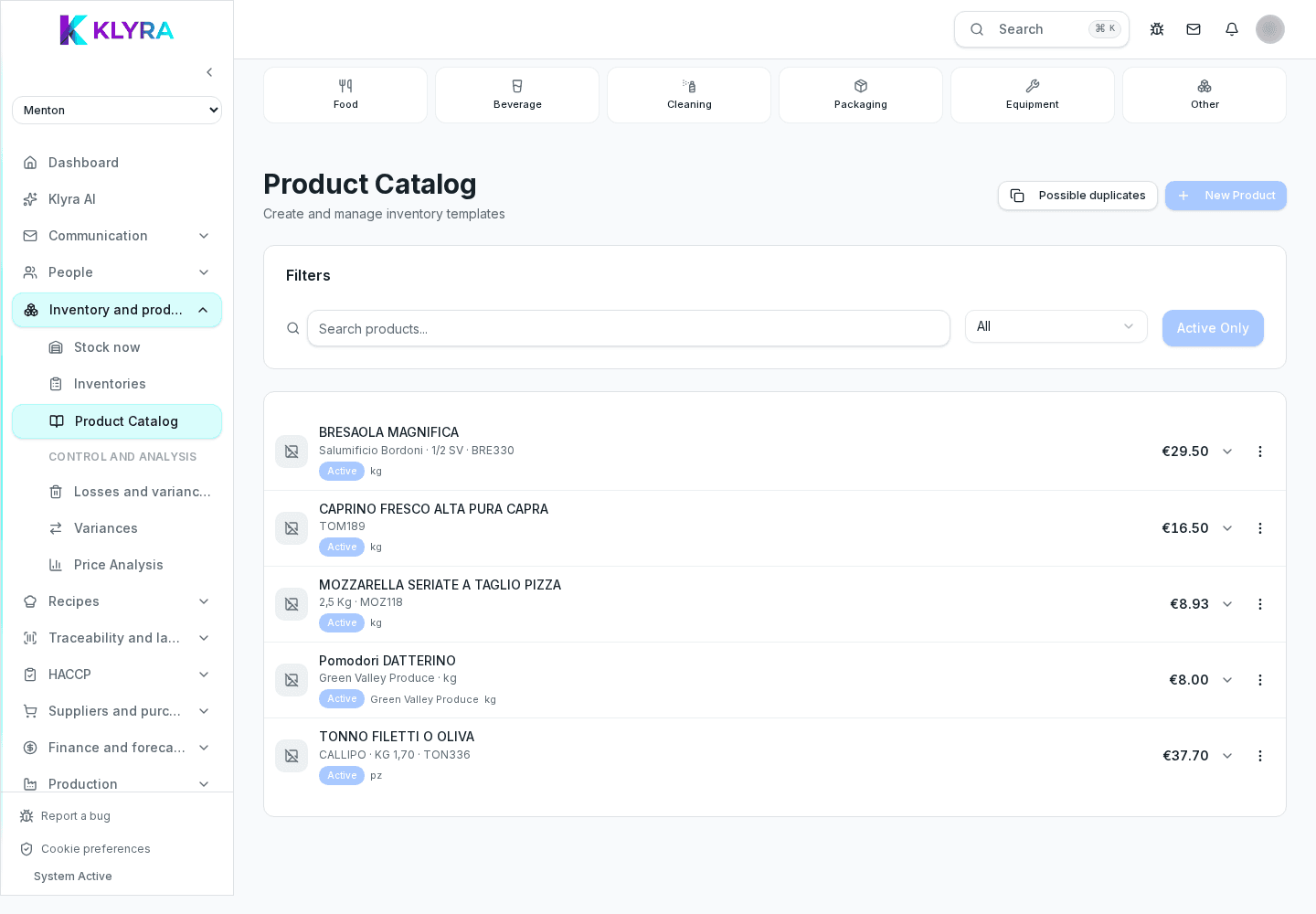
How to organise the product catalogue with units of measure, categories and minimum thresholds for a reliable stock.
The product catalogue is the foundation of your whole stock: receiving, counts, food cost and restock requests all depend on it. A well-built product sheet prevents chain errors across every other section.
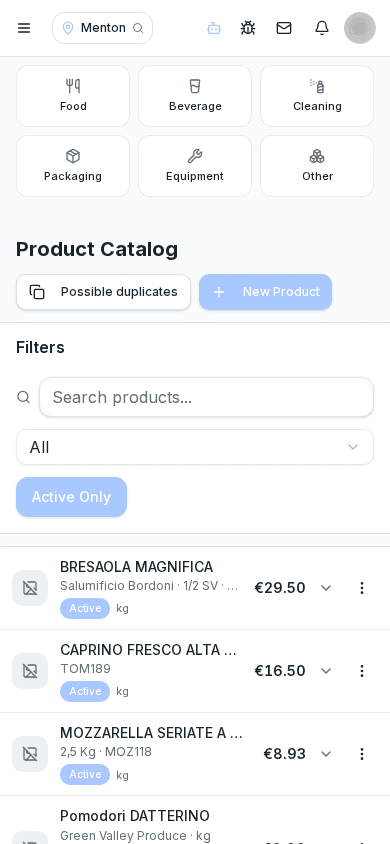
Every product has a name, a category, a base unit of measure and, if useful, a barcode for fast scanning. You can also define a purchase unit different from the consumption unit, for example cases in and kilos out.
Categories let you filter the catalogue quickly and organise counts by area or department. A clear structure reduces time spent searching for products during a count.
Setting a minimum threshold per product is what lets the system generate reliable restock suggestions. Without a threshold, the product will never appear among items to reorder.
Some products derive from others, for example a portion cut from a whole piece: you can link them to keep stock calculations consistent.
Can I have different units for purchase and consumption?
Yes, you can set a purchase unit (e.g. case) and a consumption unit (e.g. kg), with the relevant conversion factor.
What happens if I do not set a minimum threshold?
The product will never be proposed in suggested restock requests, even if stock is very low.
Can I link a derived product to a source one?
Yes, for composite products you can keep a link that helps stock consistency.
Was this guide helpful?
Still need help?
Describe the issue: page, location, organisation and role are attached automatically.
Contact support