
Deactivate or remove a user without losing business records
Revoke a person’s access, understand deactivation versus anonymised removal, and preserve company audit records.
When someone leaves the business, access must be revoked without deleting operational evidence owned by the organisation. Klyra separates inactive status from anonymised removal: choose the right action and first review sites, future shifts and open responsibilities.
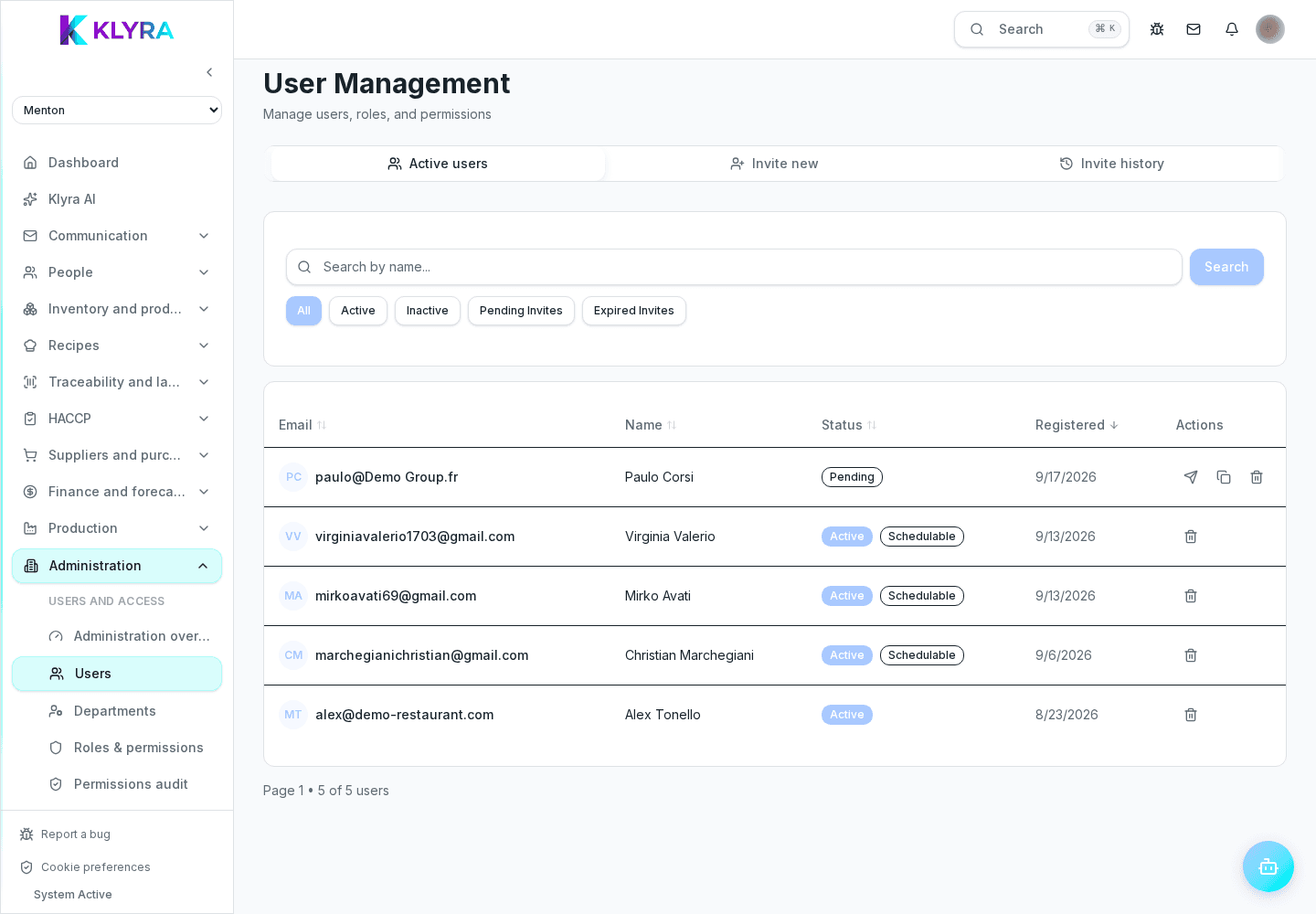
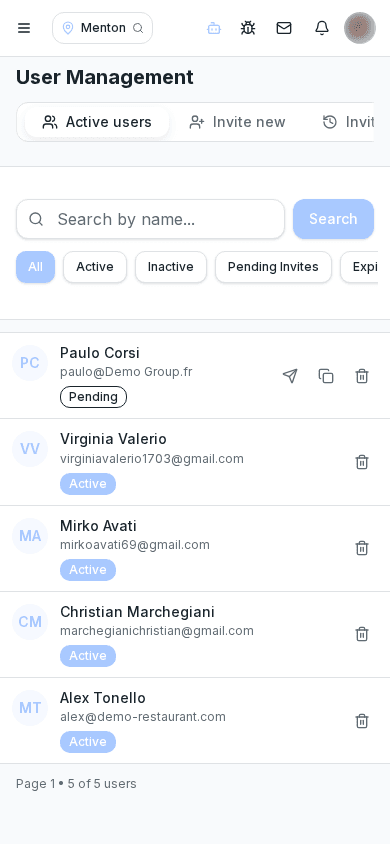
Deactivation and removal are different
Marking someone inactive pauses their operational access while retaining the profile. Removal deletes the sign-in account and anonymises name and email, while keeping the descriptive snapshots required in company records for audits, HACCP and attendance.
- Use inactive status for a temporary suspension or review
- Use anonymised removal when employment has ended
- Organisation history is not deleted
Before revoking access
Check future shifts, pending requests, assigned sites and tasks still owned by the person. Reassign anything that must continue, especially approvals, HACCP checks and department responsibilities.
Protected removal
Only an organisation administrator can remove another user, and administrators cannot remove themselves. Standard removal is irreversible: authentication is deleted and personal data is anonymised, while historical events remain available for business and compliance purposes.
After removal
Check that the person no longer appears among active users and that future shifts or tasks have been reassigned. If they return, invite them again with a new account rather than trying to restore the anonymised one.
What this guide covers
- deactivate user
- revoke access
- anonymisation
- activity history
- employee offboarding
Steps
- Open Administration > Users
- Find the person and open their profile
- Review sites, roles, future shifts and open tasks
- Choose temporary suspension or start removal
- Read the confirmation and complete the action
- Check the user list and reassign anything left open
Common issues
- You cannot remove your own account → self-removal is blocked → ask another administrator
- The person still appears in history → company records are deliberately preserved → verify that personal details are anonymised
- A shift remains assigned after removal → it was not reassigned first → correct it in Planner
- You removed someone who is returning → removal is irreversible → invite them again with a new account
Frequently asked questions
Does removal delete clockings and HACCP checks?
No. Organisation records remain available with the historical information required, while personal profile data is anonymised.
Can I reactivate a removed person?
No. You can reactivate a profile only when it was suspended; after removal, send a new invitation.
Can a site manager remove users?
Removal requires organisation administrator privileges, checked against the target user’s organisation.
Can I remove myself?
No. Klyra blocks self-removal to prevent an organisation from accidentally losing its operating administrator.
Related guides
Was this guide helpful?
Still need help?
Describe the issue: page, location, organisation and role are attached automatically.
Contact support